Open E Guitar Tuner








🎶 Tune by ear 🎶
What is a guitar tuner?
A guitar tuner helps you bring each string to the correct pitch so your instrument sounds clear, balanced, and in tune. It listens to the note you play, identifies the closest pitch, and shows whether you need to tune up, tune down, or if the string is correctly tuned.
This online tuner uses your device’s microphone to analyse your sound in real time, making accurate tuning quick and easy for both beginners and experienced players.
How to use the tuner
Click Start tuner and allow microphone access. For best accuracy, use the tuner in a quiet environment and keep your guitar close to your device.
Pluck one string at a time. The tuner will display the detected note and indicate whether the string should be tightened (tune up) or loosened (tune down). Turn the tuning peg slowly, checking the display after each adjustment, until the string reaches the correct pitch. Repeat for all six strings.
You can also use the reference tones to tune your guitar by ear.
Open E tuning: strings and frequencies
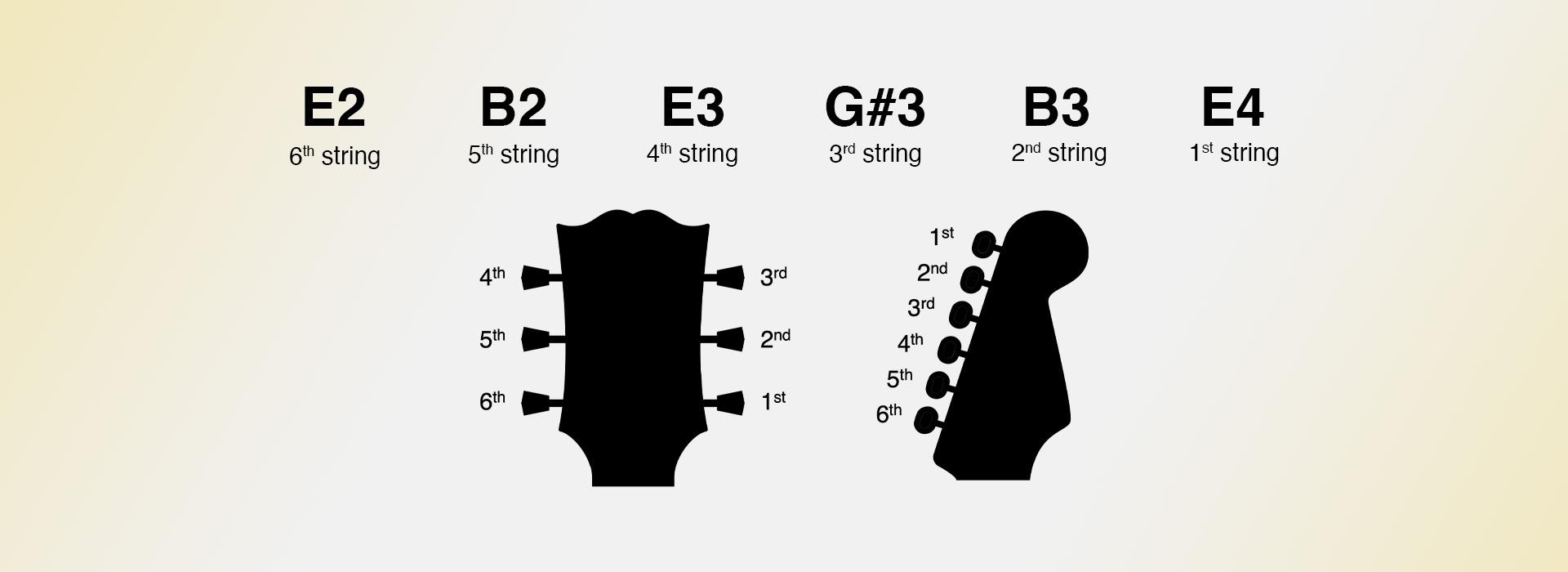
In Open E tuning, the guitar strings (from lowest to highest) are:
E2 – 82.41 Hz
B2 – 123.47 Hz
E3 – 164.81 Hz
G#3 – 207.65 Hz
B3 – 246.94 Hz
E4 – 329.63 Hz
These values are based on the international reference A4 = 440 Hz.
About Open E tuning
Open E is an alternative tuning where the open strings form an E major chord. It produces a bright, resonant sound, making it popular in blues, rock, folk, and slide guitar for its strong open chords and rich droning possibilities.
Because some strings are tuned up compared to standard tuning, tuning carefully (or using slightly heavier strings) can help manage the increased tension and avoid string breakage.
Tuner settings
You can customise the tuner to suit your environment and preferences. Adjust the A4 frequency to match different tuning standards (such as 432 Hz or 442 Hz). The confidence threshold improves detection precision, while the noise gate reduces background sounds for better accuracy. You can also choose your preferred display style, such as a meter or slider.